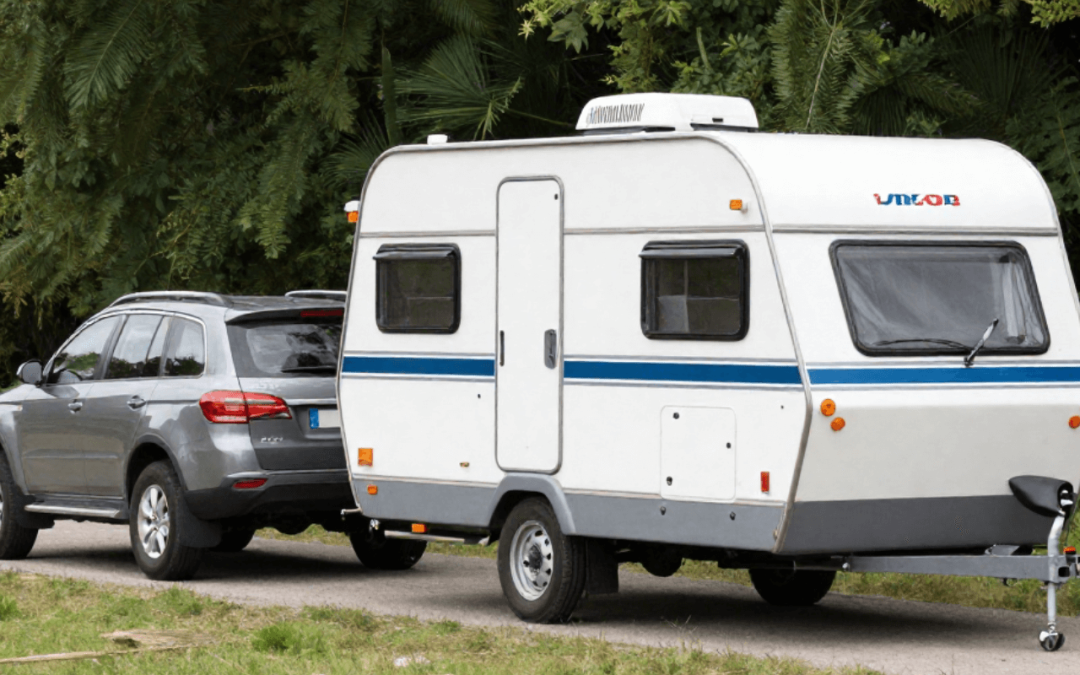
The esky is packed, the kids are loaded and you are ready for the run down the coast or the climb up the Blue Mountains. But hitching up the caravan changes the physics of your family car entirely.
Your daily commute around Penrith didn’t prepare your suspension for hauling 2.5 tonnes in 35-degree heat. Towing is a full-scale stress test for your transmission, brakes and cooling system.
At Angus Car Service, we see what happens when ‘she’ll be right’ turns into a roadside callout. Before you hit the highway this summer, here is the reality check your rig needs to keep your family safe.
Distinguishing Tow Weight from Towball Weight
People often confuse these two terms, but getting them mixed up can be disastrous.
- Tow Weight (Aggregate Trailer Mass – ATM): This is the total weight of the trailer and everything inside it. Your vehicle has a maximum limit for this, often found in the owner’s manual.
- Towball Weight (Towball Mass – TBM): This is the amount of downward force the trailer tongue places on your car’s towball.
Even if your car can pull 2500kg, putting too much of that weight directly on the ball causes the rear of your car to squat. This lifts the front wheels, lightening your steering and reducing your ability to brake or turn effectively.
A good rule of thumb is to aim for a ball weight that is 10-15% of the trailer’s total mass (GTW), with 6-10% generally cited as the minimum for stability.
Check Your Brakes and Suspension for the Extra Load
Towing puts immense strain on your brakes and exposes mechanical weaknesses you might not notice during everyday driving. Worn components that feel fine on the school run can become dangerous under towing conditions.
Your suspension needs to handle this extra load without sagging. If the factory setup struggles, upgrading can:
- Improve ride height when fully loaded, stopping the rear from dragging.
- Reduce sag and improve overall control and stability.
- Reduce stress on your factory components.
Important: Upgrades improve safety, handling and wear, but they do not increase your vehicle’s legal towing capacity. Upgrades don’t change the numbers, but they can change how safely you reach them.
Understand the Rules for Braked vs. Unbraked Trailers
The rules change depending on what you are towing.
- Unbraked Trailers: These rely entirely on your car’s brakes to stop the load. Because of this, they have much lower weight limits (usually up to 750kg GTM).
- Braked Trailers: Heavier loads legally require their own braking system (electric or override) to assist your vehicle.
If you are towing a heavy boat or caravan, ensure the trailer’s brakes are functioning correctly. A simple check of the wiring and brake lights before you leave the driveway is non-negotiable.
Manage Your Tyres, Fuel and Maintenance
Towing is hard work. It increases tyre wear (especially on the rear), spikes your fuel consumption and puts extra load on your transmission and drivetrain.
If you tow regularly, your maintenance schedule needs to change. You cannot stick to the standard “every 10,000km” plan if half those kilometres are spent hauling a 2-tonne van up a mountain.
Check your tyre pressures before you leave. Underinflated tyres are a major cause of blowouts when towing heavy loads.
Towing shouldn’t feel like a wrestling match with your steering wheel. At Angus Car Service, we strip away the mechanic-speak and focus on safety for everyone. We pride ourselves on being a workshop where every driver feels respected and heard. And we will explain the ‘why’ before we touch the ‘how’.
The 30-Second ‘Squat Test’
Before you head off, do a quick check. Hitch your trailer and stand back. Is your car’s rear sagging while the nose points at the sky? That isn’t just a heavy load; it is a suspension warning sign.
If you see the squat, tell us – we know exactly how to fix the balance. Book your pre-trip safety check online or call us on 02 4732 3676 today.
___________________________________________________________________________________________________
FAQS
Q: Are there specific speed limits when towing?
A: Yes, depending on where you are. In Western Australia, for example, the maximum speed limit for a vehicle towing a trailer or caravan is 100km/h, even in 110km/h zones. In NSW and other states, you must adhere to the posted limit unless your combined vehicle mass exceeds 4.5 tonnes, in which case a 100km/h cap often applies.
Q: How do I know if my trailer needs brakes?
A: It depends on the weight. Trailers with a Gross Trailer Mass (GTM) under 750kg generally do not require brakes. Trailers between 751kg and 2,000kg need braking on at least one axle (override or electric). Anything over 2,000kg must have brakes on all wheels and a “breakaway” system that activates automatically if the trailer detaches.
Q: Can I upgrade my car’s towing capacity?
A: Generally, no. Adding heavy-duty suspension or airbags helps with load carrying (reducing sag and sway), but it does not legally increase the manufacturer’s specified Gross Vehicle Mass (GVM) or Towing Capacity listed on your compliance plate. To legally tow more, you would need a specialised engineering certificate, which is a complex process.